Launch offer — valid today only

📄 Digital book in PDF · read it on your phone or print it

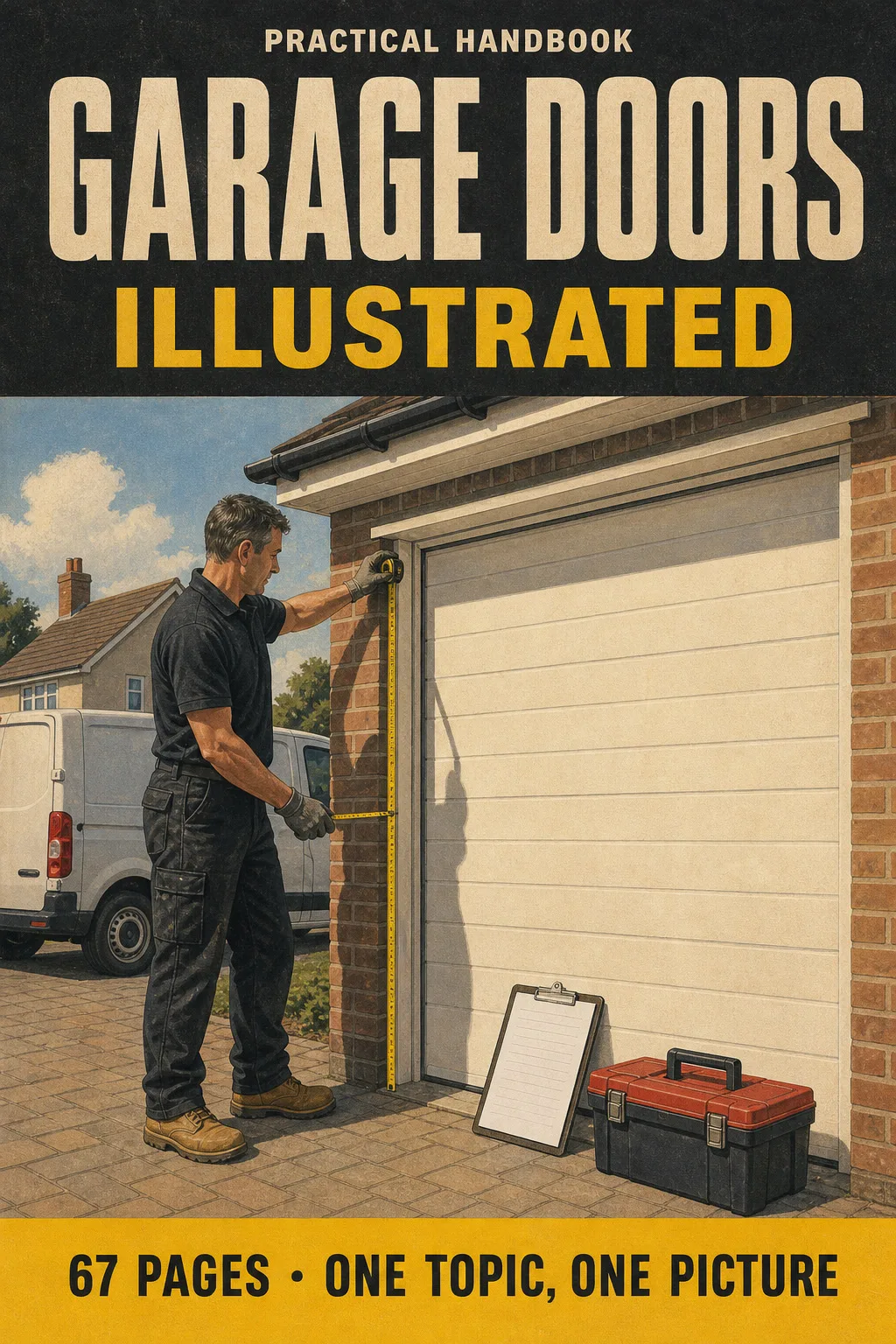
Garage Doors Illustrated: Survey, Fitting and Fault-Finding in Drawings Measure, Fit and Fault-Find in the Same Order on Every Job

For UK doors, in millimetres: the survey order, headroom and side room, frames and fixings, sectional tracks, roller curtains, springs and cables, the balance test, photocells and safety edges, fault finding. Each topic has its own page: the drawing first, then what you need to remember. 67 illustrated pages.

GET GARAGE DOORS ILLUSTRATED

🔒 Secure checkout · PDF by email · 30-day guarantee

Every topic, its own pageEach fitting step drawn, with the explanation alongside
67 illustrated pages9 parts, from the three door types to the handover
Up-to-date sourcesBS EN 13241, BS EN 12453 and the manufacturers' fitting instructions
PDF by emailFormat

Look Inside the Book

Every page has a big drawing and a box with the measurements, checks and steps you need to know:

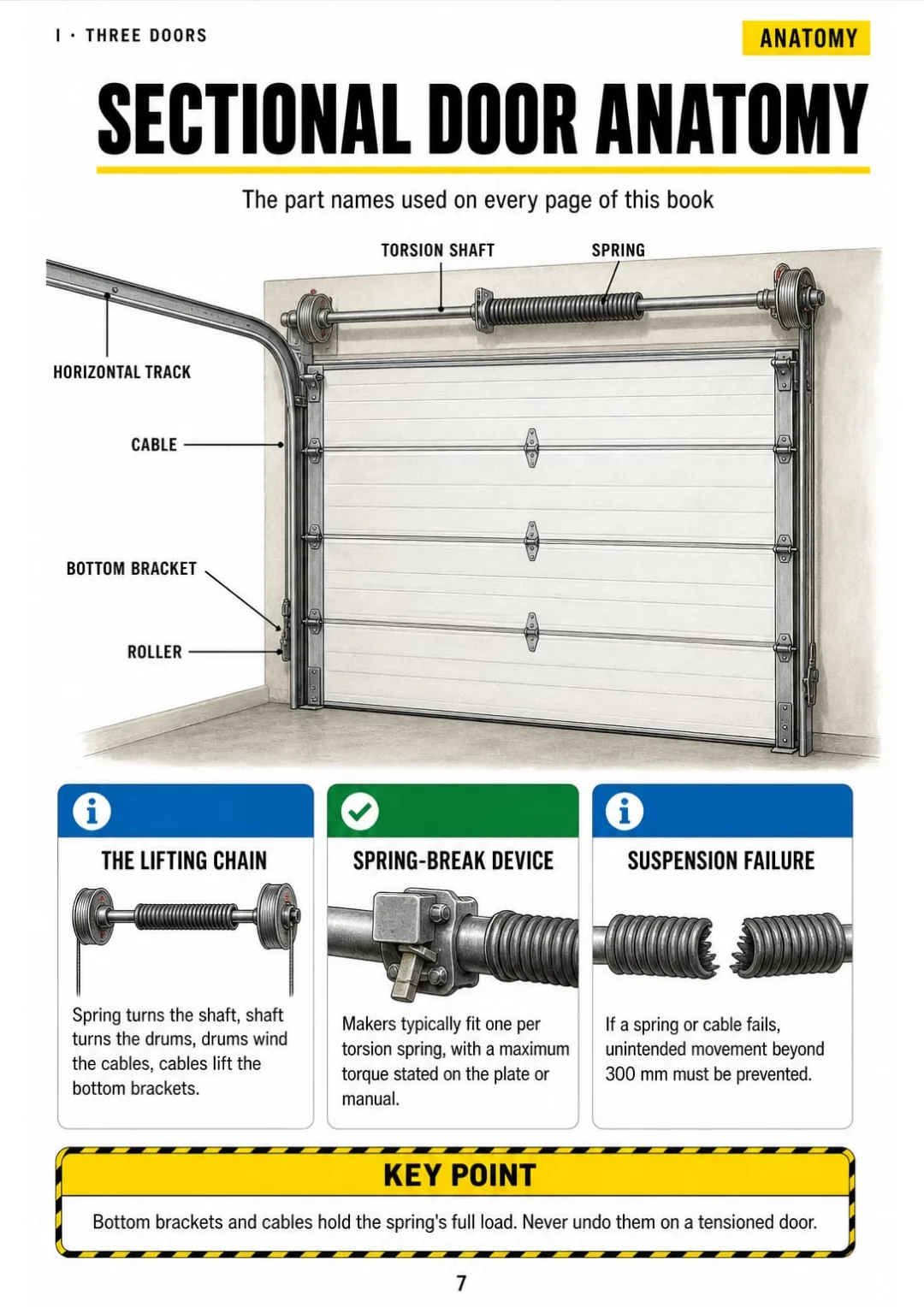
Labelled sectional door: panels, hinges, rollers, tracks, torsion shaft, springs, drums, cables, bottom brackets.
BS EN 13241, 12604, 12453 and 12635: what each covers, with current editions to check.
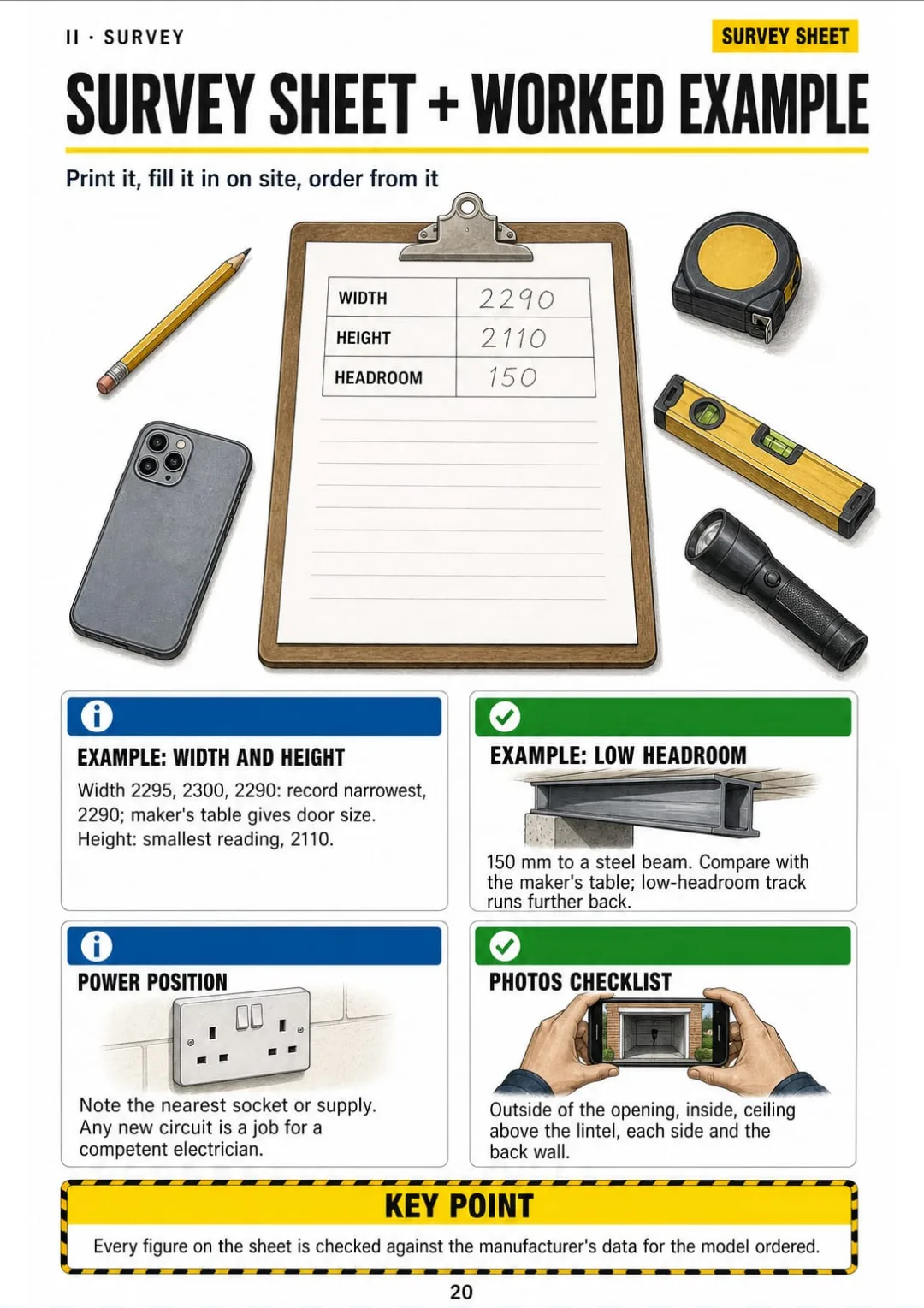
A blank survey sheet and a filled-in single garage with only 150 mm of headroom.
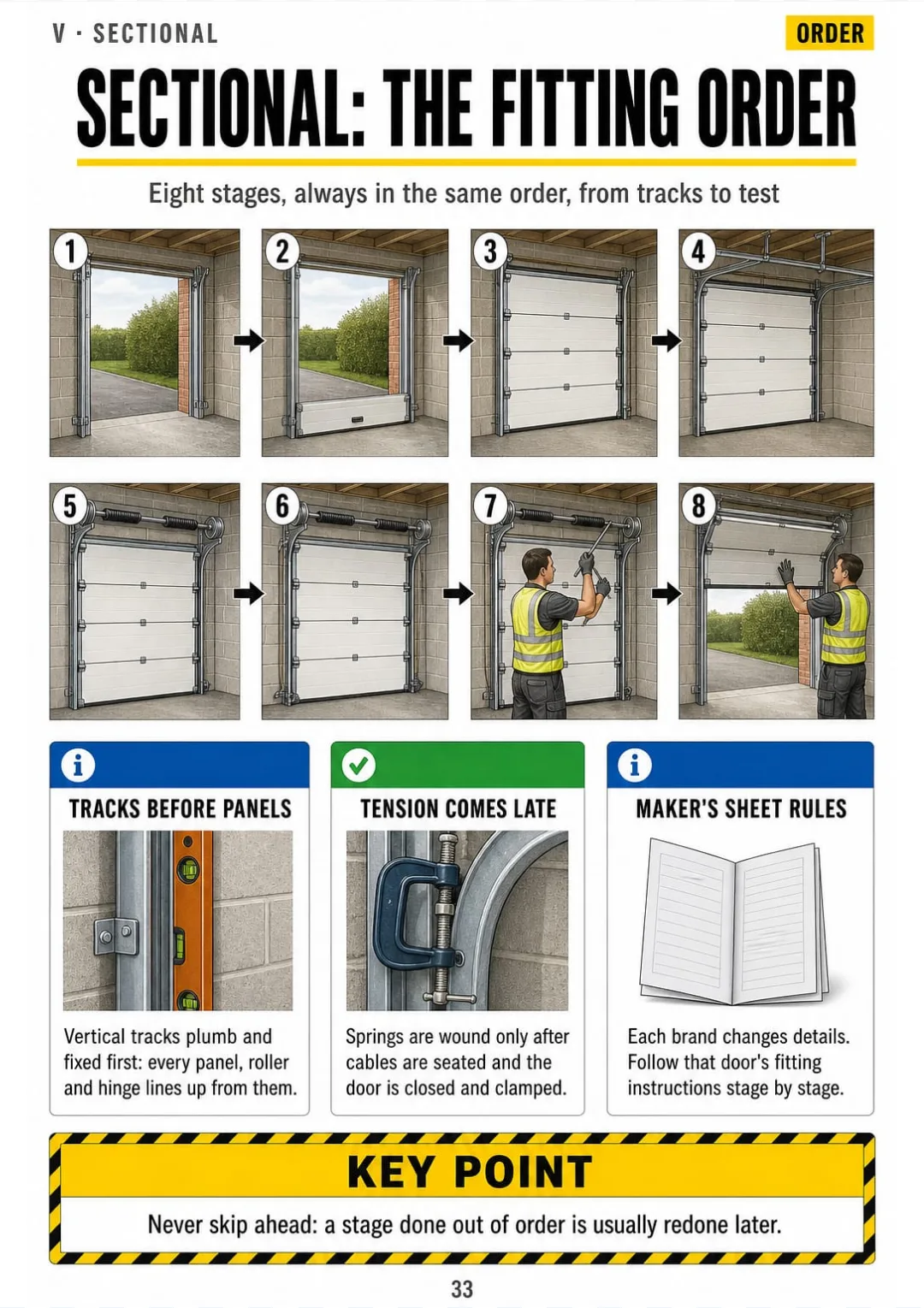
8 stages: tracks, bottom panel, panels, horizontal tracks, shaft, cables, tension, test
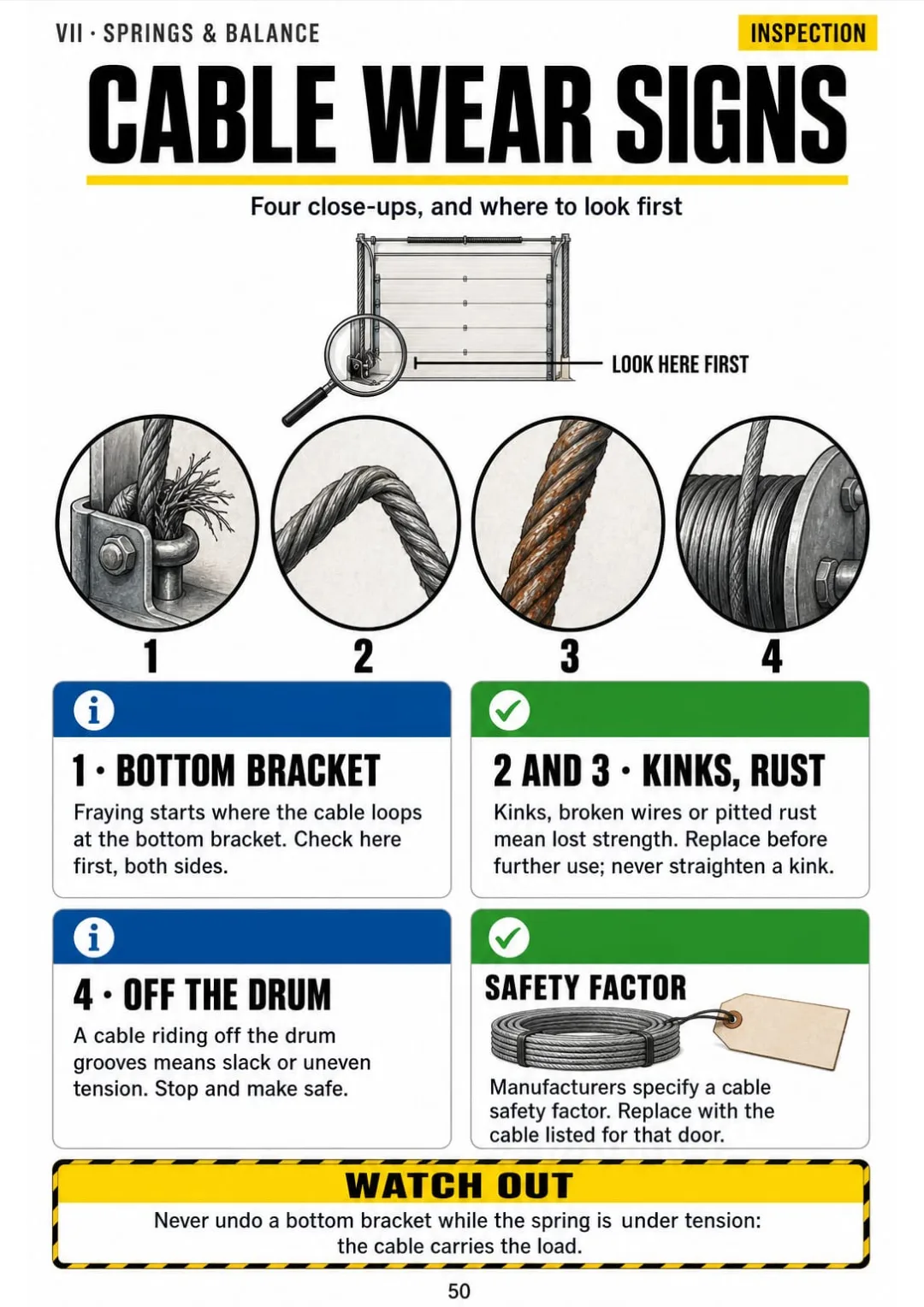
Fraying, kinks, rust, off the drum: four cable faults and where to look first.
Beams at two heights, safety edge overtravel, PL c category 2 and testing with the door running
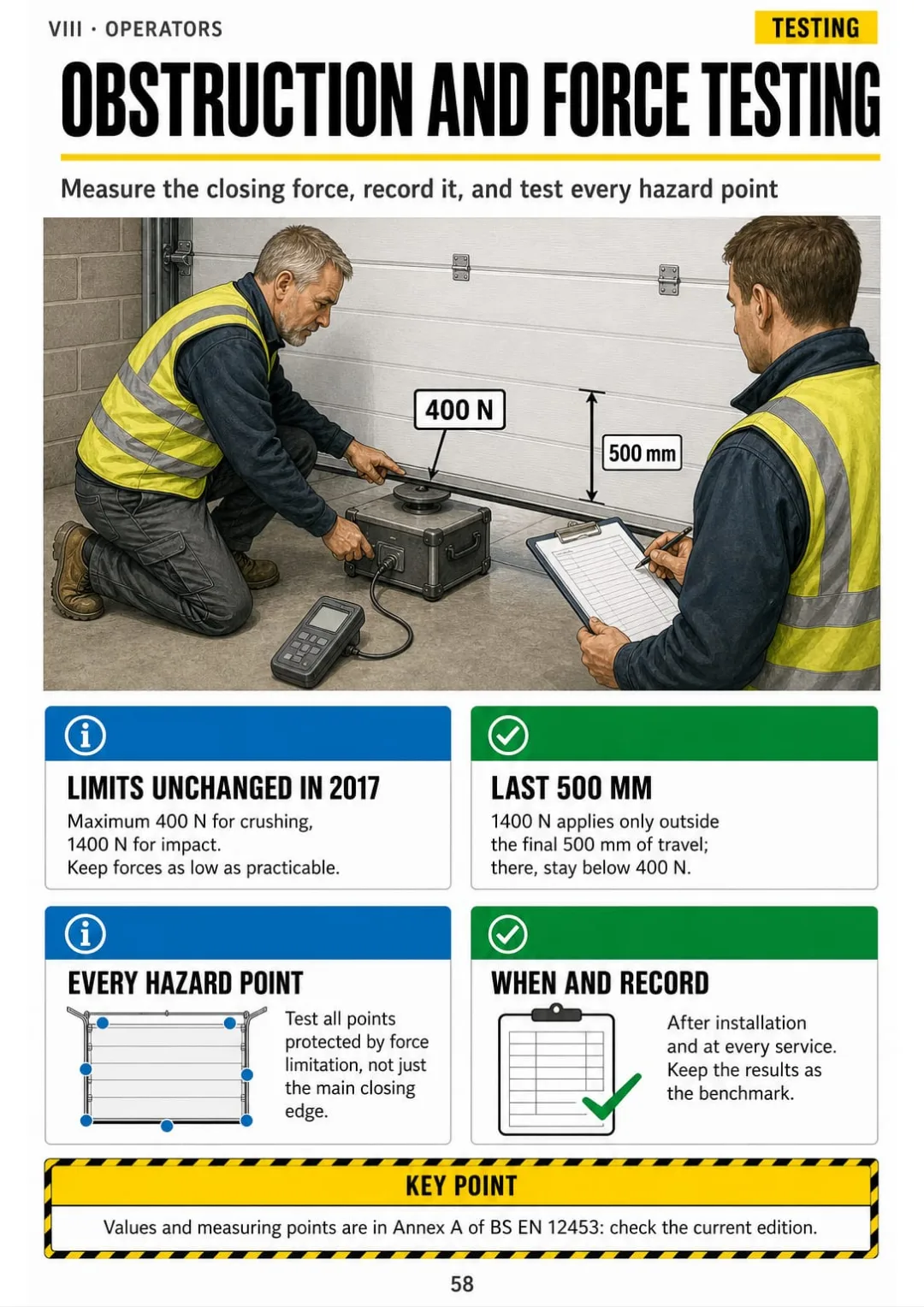
Maximum 400 N crush, 1400 N impact outside the last 500 mm, tested and recorded
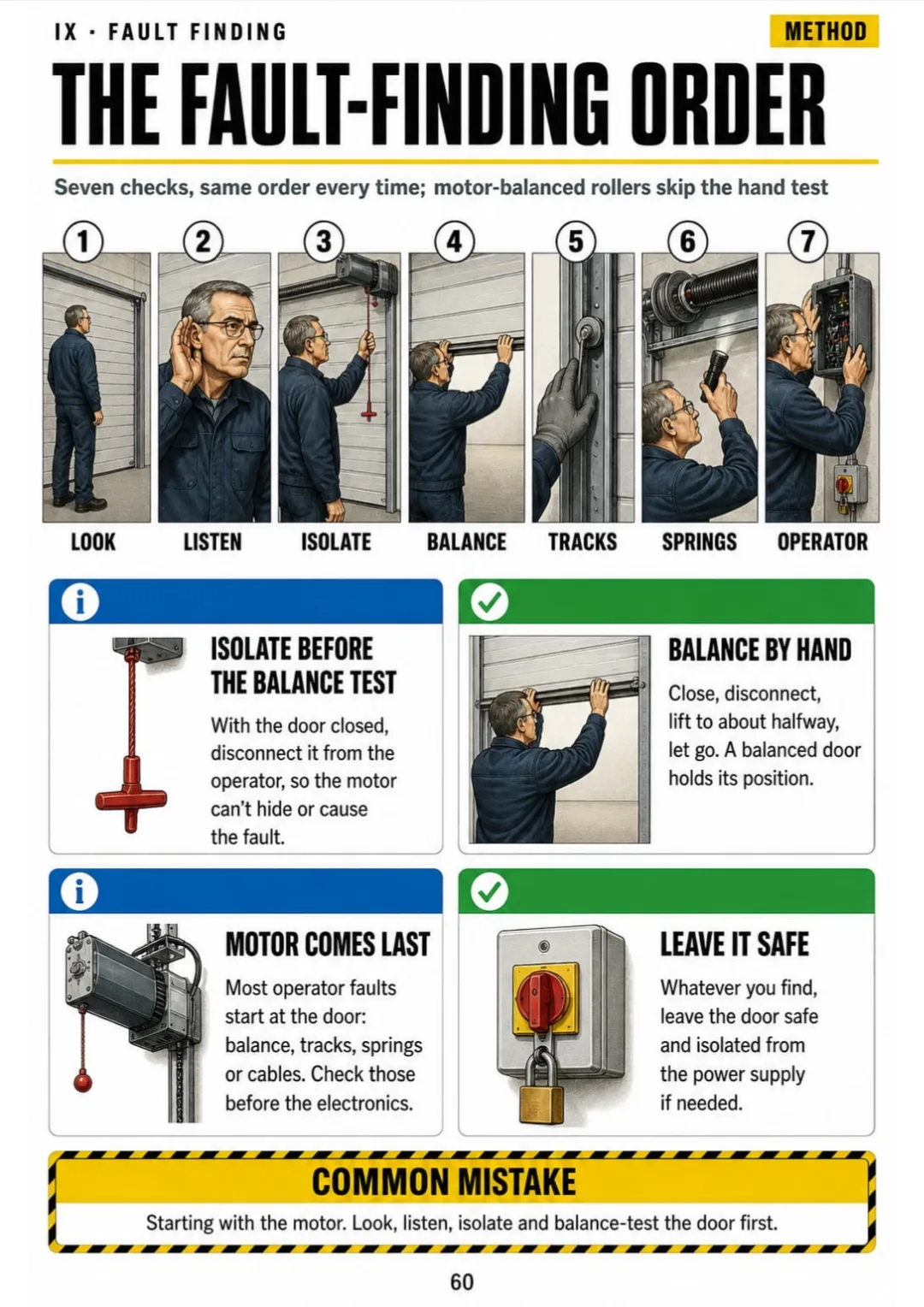
Look, listen, isolate, balance, tracks, springs, operator: the same order every time.

Swipe to see more →

These are real pages from the book. The table of contents is the full one: 9 parts and 63 topics.

The Problem Isn't You. It's How It Was Explained to You.

You're standing in a single garage with a tape measure. The customer wants a sectional, and there's only 150 mm between the top of the opening and the ceiling. Is that enough, or are you about to order the wrong door?

The manufacturer's guide covers headroom, side room and backroom across three pages of paragraphs, and every brand uses its own terms. Nothing tells you what to measure first, so you end up ringing the supplier from the drive.

A blank survey sheet and a filled-in single garage with only 150 mm of headroom.

In the book, that same garage is a survey sheet already filled in: width, height, headroom, side room and depth in the same five boxes, with the 150 mm headroom written in, so you can see what a tight opening looks like on paper.

The rest of the trade works the same way: sectional door anatomy, cable wear signs, photocells and safety edges, force testing, the fault-finding order. Each one has its own page.

You fill in the sheet on site, you know which door fits, and you order it right without going back to the manual.

COMPARE FOR YOURSELF

The Same Topic, Two Ways to Learn It

THIS
  • The manual: line after line after line
  • Standards explained only in words
  • You get to the job still unsure
Prior to ordering, the installer should establish the clear headroom available above the structural opening, measured from the underside of the lintel to the lowest obstruction within the garage, taking into account any beams, pipework, lighting or ceiling-mounted fixtures, and should compare this figure with the minimum headroom required for the selected track configuration, bearing in mind that reduced-headroom options may impose additional requirements on side room and backroom, and that these values vary between door types and should always be confirmed against the current fitting instructions before any order is placed.
FOR THIS
  • Headroom, side room and backroom in one drawing
  • The editions to check in a box
  • You see it and you get it
BS EN 13241, 12604, 12453 and 12635: what each covers, with current editions to check.
CONTENTS

Take a Look at the 9 Parts and 63 Topics

The three door types side by side, the survey, frames and fixings, fitting up-and-over, sectional and roller doors, springs, cables and balance, operators and safety devices, and fault finding through to handover: 67 pages, all illustrated.

IThree doors, side by side · pp. 5-11
  1. Up-and-over, sectional, roller: one drawing
  2. Canopy vs retractable up-and-over
  3. Sectional door anatomy
  4. Roller door anatomy
  5. Which door for which garage
  6. Counterbalance: why a door feels light
  7. The standards in one page
IISurvey the opening · pp. 12-20
  1. The survey order: always the same five
  2. Width: measure three times
  3. Height: from the finished floor
  4. Headroom: lintel to ceiling
  5. Side room: both sides, separately
  6. Depth: the backroom you actually have
  7. Fitting position: behind, between or in front
  8. Floor, lintel and walls: what to check
  9. Blank survey sheet + worked example
IIIFrames, fixings and set-out · pp. 21-26
  1. Tools for the job
  2. Fixing into brick and block
  3. Timber subframes
  4. Plumb, level and square
  5. Packing and shims
  6. Lifting and handling safely
IVFitting an up-and-over · pp. 27-32
  1. Up-and-over: the fitting order
  2. Removing an old door safely
  3. Setting and fixing the frame
  4. Tension springs and cones
  5. Adjusting the up-and-over
  6. Locks and latching
VFitting a sectional · pp. 33-40
  1. Sectional: the fitting order
  2. Vertical tracks and jamb fixing
  3. Stacking panels and hinges
  4. Horizontal tracks and rear hangers
  5. Torsion shaft, drums and cables
  6. Winding torsion springs: the safety page
  7. Low-headroom track options
  8. Seals and weather strips
VIFitting a roller door · pp. 41-46
  1. Roller door: the fitting order
  2. Guide rails: plumb and parallel
  3. Axle, brackets and the coil
  4. Hanging the curtain
  5. Spring-balanced vs motor-balanced
  6. The box and hood
VIISprings, cables and balance · pp. 47-53
  1. Stored energy: why springs injure
  2. When to stop and leave it safe
  3. Reading spring wear
  4. Cable wear signs
  5. The balance test, step by step
  6. Adjusting balance: small steps
  7. Replacing springs in pairs
VIIIOperators and safety devices · pp. 54-59
  1. Choosing the operator
  2. Power supply to the operator
  3. Setting limits and force
  4. Photocells and safety edges
  5. Obstruction and force testing
  6. Manual release
IXFault finding, service and handover · pp. 60-67
  1. The fault-finding order
  2. Door drops or won't stay up
  3. Door sticks or binds
  4. Noisy door
  5. Operator won't move the door
  6. The service visit
  7. Handover: what the customer gets
  8. Most frequent mistakes

One Page, One Topic, All Clear

Think of it this way:

A customer rings: their sectional door drops halfway as soon as they let go of it. You're on the drive and you need a fixed order to check it, not a guess.

You open the fault-finding page and it's drawn in front of you: look, listen, isolate, balance, tracks, springs, operator. The same order every time.

Fraying, kinks, rust, off the drum: four cable faults and where to look first.

The same goes for the survey order, sectional door anatomy, cable wear signs, photocells and safety edges, and obstruction and force testing: each one on its own page.

Garage Doors Illustrated is 9 parts and 63 topics, all drawn, with a blank survey sheet, a worked example and the most frequent mistakes at the end.

What you see drawn, you don't have to memorize.

What's Inside Garage Doors Illustrated:

Ipp. 5-11

Three doors, side by side

Up-and-over, sectional and roller in one drawing, canopy vs retractable, the anatomy of each door, which door suits which garage, counterbalance and the standards on one page.

IIpp. 12-20

Survey the opening

Measure once and order the right door: the survey order, width, height, headroom, side room, depth, fitting position, floor, lintel and walls, plus a blank survey sheet and a worked example.

IIIpp. 21-26

Frames, fixings and set-out

Tools for the job, fixing into brick and block, timber subframes, plumb, level and square, packing and shims, and lifting safely.

IVpp. 27-32

Fitting an up-and-over

The up-and-over fitting order, removing an old door safely, setting the frame, tension springs and cones, adjustment, locks and latching.

Vpp. 33-40

Fitting a sectional

The sectional fitting order, vertical and horizontal tracks, panels and hinges, torsion shaft, drums and cables, the torsion spring safety page, low-headroom options and seals.

VIpp. 41-46

Fitting a roller door

The roller door fitting order, guide rails plumb and parallel, axle and brackets, hanging the curtain, spring- vs motor-balanced, and the box and hood.

VIIpp. 47-53

Springs, cables and balance

Know when to carry on and when to leave the door safe: why springs injure, spring and cable wear signs, the balance test step by step, small adjustments and replacing springs in pairs.

VIIIpp. 54-59

Operators and safety devices

Choosing the operator, power supply, setting limits and force, photocells and safety edges, obstruction and force testing, and manual release.

IXpp. 60-67

Fault finding, service and handover

The fault-finding order, doors that drop, stick or run noisily, operators that won't move, the service visit, the handover and the most frequent mistakes.

At the end of the book: A blank survey sheet with a worked example, the fault-finding order and the most frequent mistakes.

Plus: 2 Free Books

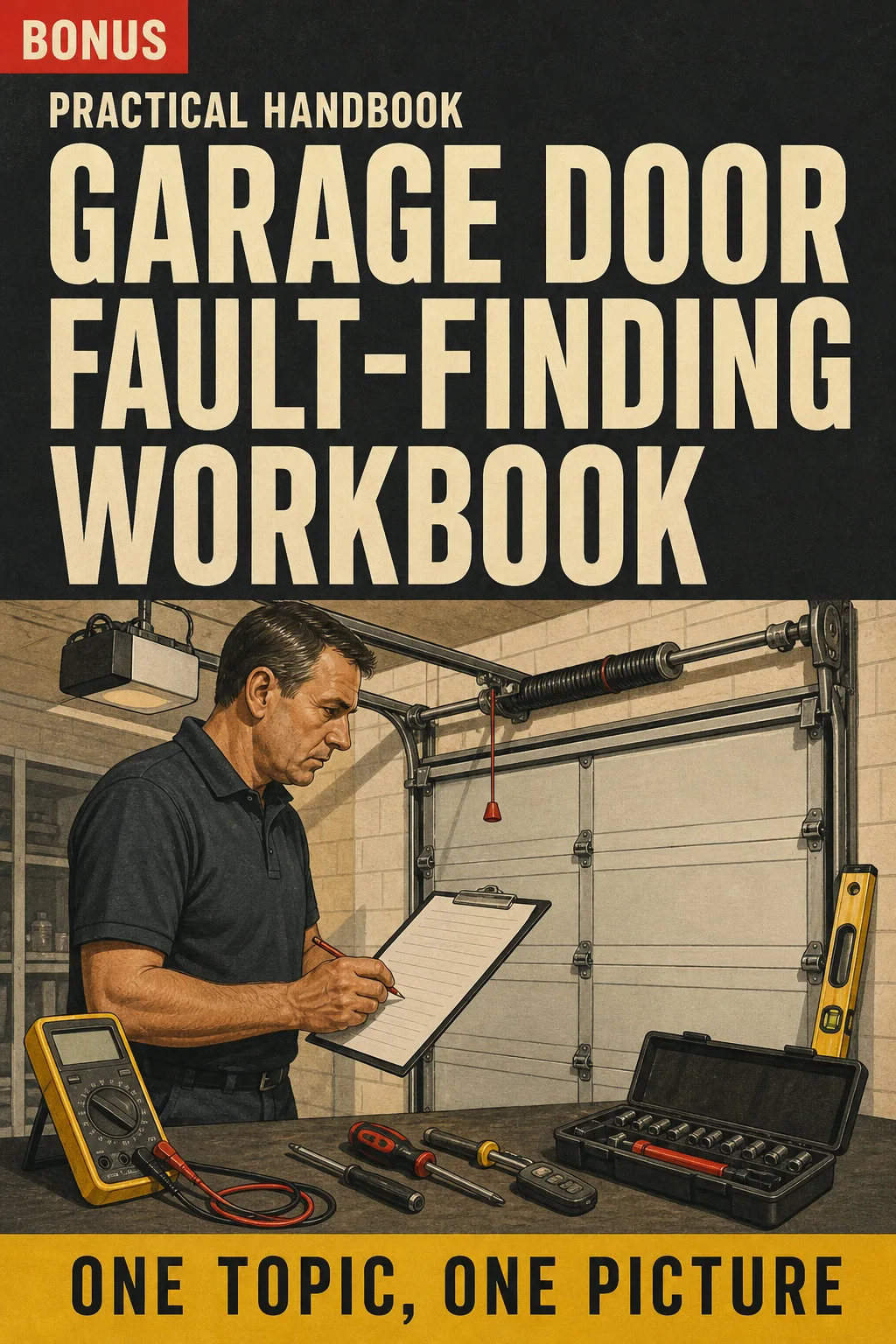
Garage Door Fault-Finding Workbook

BONUS 1: «Garage Door Fault-Finding Workbook»

Value on its own: US$ 17.90

Real call-out scenarios to work through on paper (door drops, sticks, runs noisily, operator won't move), so the checking order becomes second nature before you're in front of the customer.

Fitter's Pocket Cards

BONUS 2: «Fitter's Pocket Cards»

Value on its own: US$ 14.90

One-page reminders of the survey measurements, the balance test, spring and cable wear signs and the handover points, to print and keep in the van.

Garage Doors Illustrated with 2 Free Books

  • Garage Doors Illustrated: 67 illustrated pagesUS$ 63
  • BONUS 1: Garage Door Fault-Finding WorkbookUS$ 17.90
  • BONUS 2: Fitter's Pocket CardsUS$ 14.90
  • High-resolution PDF to printIncluded
Total value US$ 95.80
YOUR PRICE:
US$ 27
You save US$ 68.80
YES, I WANT GARAGE DOORS ILLUSTRATED FOR US$ 27

📄 This is a digital PDF book sent to your email: nothing is printed or shipped.

Secure purchaseEncrypted payment30-day guarantee

PDF by email: We email you Garage Doors Illustrated as a PDF, together with the two free books. It's a single payment: no installments, no extra charges.

Who This Book Is For

You're adding sectionals and rollers

You're adding sectionals and rollers

Every part of a sectional and a roller door labelled, and each fitting order drawn step by step, next to the up-and-over you already know.

You're training a new fitter

You're training a new fitter

The survey in the same five measurements, with a blank sheet and a worked example, so they measure and hand over the way you do.

You already fit doors for a living

You already fit doors for a living

A reference for the van: the balance test, spring and cable wear signs and the fault-finding order, one page each, printed and to hand.

Everything You Get Today

US$ 95.80US$ 27
YES, I WANT GARAGE DOORS ILLUSTRATED FOR US$ 27

📄 This is a digital PDF book sent to your email: nothing is printed or shipped.

30DAYS
GUARANTEE

30-Day Guarantee

Try Garage Doors Illustrated for 30 days, bonus books included.

We refund everything if the file won't open, if the book isn't what you see here, if you were charged twice or if the email doesn't arrive. Just email us.

You pay once. No subscriptions.

Frequently Asked Questions

Is it for me if I've been fitting garage doors for years?

Yes. It isn't a beginner's book: it puts the whole trade in one place, drawn and in a fixed order, from the survey to the handover, with measurements in millimetres and UK doors and standards.

Where does the content come from?

From BS EN 13241, 12604, 12453 and 12635, BS 7671 for the supply to operators, and manufacturers' fitting instructions. Every figure, interval and limit is marked to check against the current version.

Is it official material?

No. It's an independent illustrated trade guide, not affiliated with any standards body, trade association or manufacturer. It doesn't come with a certificate and doesn't count as accredited training.

Does it replace training or the manufacturer's instructions?

No. Always follow the manufacturer's current instructions and the standards in force. Spring and cable work involves stored energy and needs proper training and tools; electrical work beyond your competence goes to a qualified electrician.

Are the practice scenarios taken from a course or assessment?

No. The call-out scenarios in the workbook are written for this book and aren't official questions from any course or assessment.

When and how does it arrive?

The book and the 2 bonus books come as PDFs by email, to the address you enter at checkout.

Do I have to pay every month?

No. It's a one-off payment.

Can I have it on paper?

It's a PDF, not a posted book: you print it yourself at home or at a print shop. It's laid out to print on A4, so you can keep the book and the pocket cards in the van.

How does the refund work?

You have 30 days. We refund everything if the file won't open, if the book isn't what you see on this page, if you were charged twice or if the email doesn't arrive: just email us.

Before You Close This Page

No more rereading manuals that don't stick.

Headroom, side room and backroom: you see them drawn, and that's it.

You arrive on the job knowing where everything is.

Drawings make studying faster.

The book is right below.

One-time payment: US$ 27 · Guarantee: 30 days · PDF by email

YES, I WANT GARAGE DOORS ILLUSTRATED FOR US$ 27

📄 This is a digital PDF book sent to your email: nothing is printed or shipped.